
The Iran-Israel War might not be about bombs
Bunker Busters for beachfront property and much more
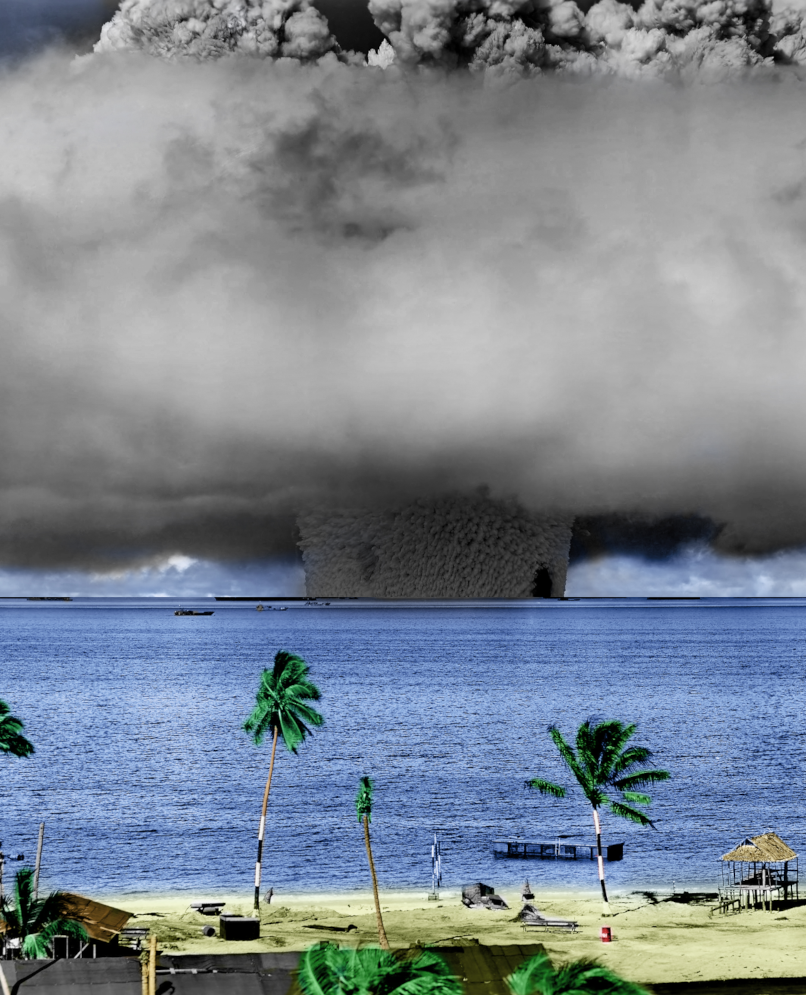
Trump's bunker bomb drop struck me as odd. Are these bombs really the coup de grâce for Israel's attack on the Iranian nuclear program? The set-up and delivery feels more like reality show shocking revelation and cliffhanger. Now, Trump announces a cease-fire on social media like his next crypto meme coin. All this makes me wonder.
Points unseen
With all eyes focused on bunker busters, here are some points to consider, now passing unseen from misdirection and lack of imagination. I am no expert, just a person with a mind like grandma's farmhouse attic, chock full of interesting things, in no particular order, that turn up while I unpack events today.
Israel has the bomb
Do not forget Israel has the bomb. Most people do.
Israeli governments for years have played a non-proliferation game saying they will not "introduce" nuclear weapons to the region. But they have them. In 1979, working with South Africans, another country surrounded by enemies, Israel got its test bang and was off. While the world did not know, governments figured it out. This is certainly a deciding factor in why Arab nations stopped invading Israel. The Center for Arms Control and Non-Proliferation puts Israel's arsenal at 90 weapons with plutonium on hand for upwards of 200 more, for delivery by missile or aircraft.
The Arab wars against Israel, back in the day, were inspired by grievance against western colonial powers as much as opposing Israel for its own sake. So, when these Arab nation-states with tanks, planes, artillery and troops invaded, Israel faced genuine existential threat. Lose against conventional armies and the whole river to sea project is very a real possibility. Post-bomb, however, and Israeli conventional wars are Israel invading, not defending. Attacks in Israel today are proxy wars with nation-states employing expendable assets, aka mostly Palestinians.
Mutually Unassured Destruction
While Israel would not chose a nuclear-armed Iran, it could be dealt with. The U.S. and Russia have not blown themselves up for decades. India and Pakistan, part of Israel's nuclear acquisition cohort, have managed not to nuke each other in spite of deep animosities.
Bizarrely, the country with the least at stake facing a nuclear-armed Iran in the region is, arguably, Israel. It is Iran's neighbors around the Gulf region who cannot use Mutually Assured Destruction (MAD) to survive. And none of these other countries have the time and required resources to pull anything together any time soon. Everyone but Israel is out of luck from this perspective.
So the Gulf States and Iraq must greatly appreciate Israel's attack on Iran's nuclear program. While 21 Arab and Muslim nations did release a condemnation of Israel's actions, it only mentioned Israel 4 times, two were the title and a topic sentence. Mostly the document discussed de-escalation and anti-nuclear proliferation. All valid points, but hardly a full-throated condemnation of Israel, even considering diplomatic speak. The statement reads more like a "we need to say something" piece than anything else.
Regime sleight of hand
While Israel prefers to be the only bomb in town, there are other considerations.
The tangible contention between Israel and Iran are Hezbollah and Hamas, both Iranian proxies who have done real harm within Israel. These are groups that Israel rightfully wants gone. While neither are nation-states, they do act to secure territory for themselves. I have no insight into the realpolitik behind Iran's support for these groups outside of keeping Israel off-balance and focused within, but they organize against Israel in a way unmatched by any outside country. And they certainly do not have to care about any nuclear retaliation.

Comments ()