
My Progressive Art of War
How Sun Tzu's ancient text can fight Trump today

Full disclosure, I just released A Progressive Art of War. So while a bit of shameless self-promotion, it is for a good cause—sharing how Sun Tzu’s The Art of War is relevant to the progressive movement and the fight against privilege.
Beginning
The Art of War was the first book I ever read with a pencil in my hand. Back in high school, Shogun, the first time around, was a hit mini-series and author James Clavell had a moment. He wrote a forward for an edition that turned up in my mother’s Paperback-of-the-Month club. I cannot recall what interested me in the book’s description.
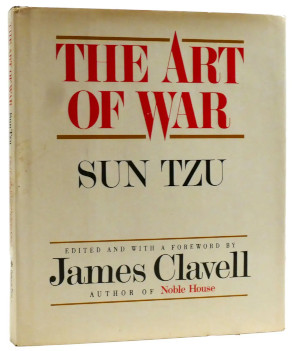
Perhaps it appealed to my nascent sense of class struggle or, more likely, an adolescent “this looks cool learn how to fight” way. Whatever the reason, I got the book and it changed how I look at conflict for the past 40 years.
More than war
The title will put progressives off, thinking it is all enemies, battles, weapons and death. There is war in the book, with muscular lines like “… when you move, fall like a thunderbolt.” But there are unexpected emotions as well.
“On the day they are ordered out to battle, your soldiers may weep, those sitting up bedewing their garments, and those lying down letting the tears run down their cheeks. But let them once be brought to bay, and they will display great courage.”
Clausewitz, in his renown On War, never mentions crying.
The Art of War is as much about avoiding conflict and conserving resources as it is engaging in war. A deceptively simple text that leads a reader to examine how they evaluate situations and plan strategies, build strong defenses while looking for opportunities to win objectives, and succeed without fighting whenever possible.
We must be honest with ourselves and admit our strategies to-date left us with Trump again. As much as we can blame others for how they voted, our side simply failed to stop Trump
What is the relevance for Trump 2.0
If you consider winning public opinion and building coalitions as gains, then discussions of taking and holding territory make the work relevant. How to gather resources, identify priorities, understand the opposition, uncover options and then plan to move—it is all discussed. And the one paragraph I would have every progressive remember is this:
The good fighters of old first put themselves beyond the possibility of defeat, and then waited for an opportunity of defeating the enemy. To secure ourselves against defeat lies in our own hands, but the opportunity of defeating the enemy is provided by the enemy. Thus, good fighters of old are able to secure themselves against defeat, but cannot make certain of defeating the enemy.
Sun Tzu counsels the reader to consider the entire world that a conflict is situated within. Progressives must think beyond how our righteousness alone should win the day. There are particular situations we find ourselves in, resources we may or may not have, and, importantly, an active opposition seeking to stop our ideas and turn public discourse against us.
First, then, is examining how what we say or do may be used against us to not give opponents easy lines of attack. So, for quick example, “Abolish ICE” while laudable, scans to the uninitiated as lawlessness. This gives opponents leverage against us. However, if the rallying cry was “Melt ICE,” we could discuss change without handing opponents any easy way to turn opinion against us.
We must be honest with ourselves and admit our strategies to-date left us with Trump again. As much as we can blame others for how they voted, our side simply failed to stop Trump. We need to deeply consider what the progressive movement is and how to restructure our strategies to match the challenges today in fighting privilege. This is no call for centrism, but rather a plea to create an effective movement that wins the day in the face of virulent opposition.
Why read this edition?
Unrooted in the modern day, reading The Art of War is a chance to consider strategy as strategy, while avoiding distractions of modern theories on political action and social change. The work encourages readers to carefully examine their situation, motivations, resources, opposition and to avoid reacting, but rather purposefully act to win with as little conflict as possible.
I have added in-line comments to map the work onto contemporary progressive movement language to make connections more clear and relevant.
Here, then, is A Progressive Art of War.
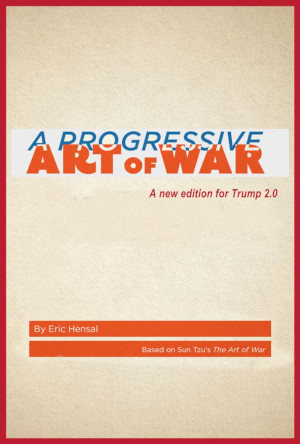
I hope you find this useful.

Comments ()