
Pitcher of Spit that Raised the River
How fascism empowered J.D. Vance to damn the public and drain a lake
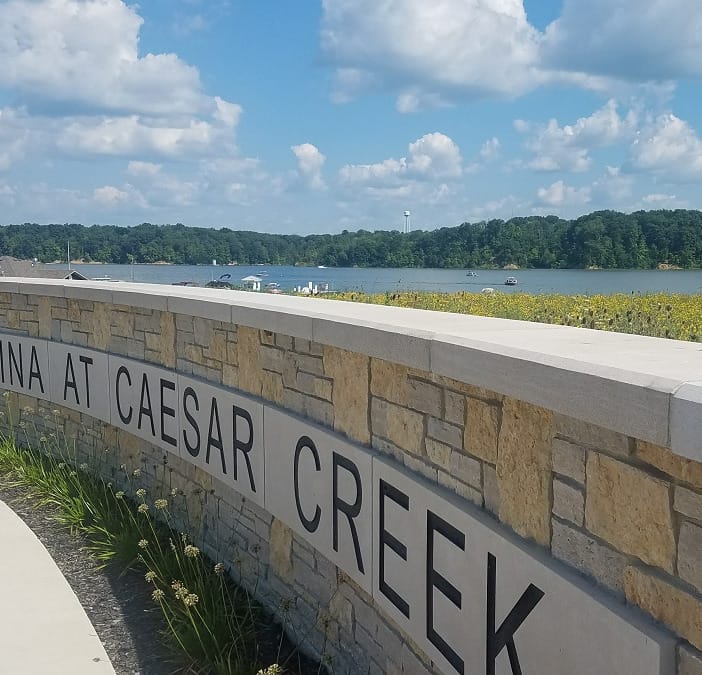
Continuing from my initial post on Democracy sold down the river, this piece examines how fascism empowered Vance to simply order water releases. The Guardian's story on J.D. Vance raising the Little Miami River level garnered more attention than my usual post. Comments here and on Bluesky kept this story forward in my thoughts until I realized something was passed over in my first effort.
How can a Vice-President get anything from anyone? It is the most toothless job described in our Constitution—no department to run and a presiding officer of a Senate that will not let you preside. You break ties and are an understudy for death; that is it. "A pitcher of warm spit" is the phrase forever connected to Lyndon Johnson, supposedly coined by FDR Vice-President John Garner describing the office, albeit with a more colorful liquid in the pitcher.
There are Vice-Presidents who made something of the job. Dick Cheney, who essentially served as George W. Bush's Prime Minister, at least in matters of pure evil. Al Gore was a force in the Clinton administration with Reinventing Government, which was DOGE done correctly. Joe Biden became more important to Obama over their time together in office. These people were established Beltway hands who understood how government worked and had relationships within it long before serving asVice-President. Lacking structural power but possessing presidential assent, their influence in government made sense.
Then there is J.D. Vance, Peter Thiel's lab experiment let loose like COVID to roam our countryside. With just two years in the Senate as experience and no discernible close relationship with Trump, who would listen to this guy? What is the pain for an ethical public servant pushing back against Vance's screw the public river-raising. Is Vance going to tattle to Trump that the big mean Corps of Engineers will not let him have his river party? Would Trump even care?
We are on fascism's path when these things happen. That a person with a title and little else orders actions against the public's interest and civil servants comply. What is the mechanism for this? Remember this from the now head of the Office of Management and Budget (OMB) Russell Vought.
"We want the bureaucrats to be traumatically affected. . . . When they wake up in the morning, we want them to not want to go to work, because they are increasingly viewed as the villains. We want their funding to be shut down … We want to put them in trauma."
Outside the data theft, the goal of Trump's opening DOGE chaos was to put the fear of God into federal workers. Traumatize them into pre-compliance. Just go through Project 2025 and the anger towards any federal worker having a free thought is palpable. Trump's viscous randomness, disregard for civil service law and custom, and clear glee terrorizing puts workers into a survival mode where compliance is key and professionalism and honoring your oath of office will just get you fired.
There is a reasonable debate about a civil servant's role in society. How independent versus bound to popular mandate. In the public administration literature, there is an exchange referred to as the Friedrich–Finer debate.
Carl J. Friedrich from Harvard and Herman Finer out of the University of Chicago contended in 1940s over how to keep a growing wartime bureaucracy both effective and accountable. Friedrich's Public Policy essay said civil servants must rely on an internal compass—professional ethics, expertise, and a commitment to the public good—when rules fell short. Finer's Public Administration Review replied such self-policing invited drift, demanding instead strict external controls through law, rules, and elected oversight. A description of the back and forth is here.
I geeked out for a moment I know, but it is worth pointing out the legitimate tension in a civil servant's role has been examined for quite a while. We expect from them expertise and respect for their offices. But they are also instruments to express the will of a democratically elected government. However, the commonality between these points is neither side expects civil servants to be unlawful. There may be a debate on how much latitude a worker has do define that point, but the backdrop is an assumption of lawfulness.
Which brings us to fascism. In short, fascism relies on this inherent tension many see and leverages it into a convergence of leader and law. What a person in power says is the rule to follow. The fear introduced by Trump into the civil service is meant to drive this message into every worker—you have no recourse to do anything other than what I say.
Now bureaucrats are resourceful and find ways of self-expression. Mostly in a work-to-rule where they will never help political leadership avoid obvious public relations mistakes, because that is not in their job description. However, back to the worthless pitcher of spit J.D. Vance, fear will always come first and that will drive compliance to ridiculous orders like draining the lake to feed a river. While Vance himself is powerless and pointless, no one wants to find out what would happen if they do not listen and then risk the wrath of an arbitrary administration.
Raising the river was a low-stakes decision, not worth the risk fighting back. My concern is—where is the new line of pushing back, or not? These are the questions we asked about Nazi Germany—now we face these same questions today. I continue exploring this question in Vacation Planner of the United States.
Comments ()