
Iran's Rope-a-Dope
WWII proved bombing doesn't break police states. Iran's leaders know it. Their strategy: absorb punishment, blockade the Strait of Hormuz, and let economic pain end the war for them.
Past Lessons, Never Learned
After World War II, The United States Strategic Bombing Survey, Summary Report (European War) found that German war production actually increased through 1944, peaking even as the Combined Bomber Offensive intensified. Strategic bombing has long been seen as a wasteful strategy. But who is surprised Donald Trump failed to consider history or today's realities as he began February's Iranian war?
"If they [German workers] had been at liberty to vote themselves out of the war, they would have done so well before the final surrender. In a determined police state, however, there is a wide difference between dissatisfaction and expressed opposition...by and large workers continued to work." – United States Strategic Bombing Survey, Summary Report (European War), September 30, 1945, p. 12.
U.S. post-war research established that a strong coercive state apparatus could adapt its population to focus on war production. Bombing did not foster the desire to overthrow the Nazi government — it hardened a resolve to produce more. And on a practical level, if you bomb out other businesses and employment, what else can a person do to make a living but work in war production? From World War II onward, history shows bombing has a diminishing utility as war progresses. And that point is rapidly approaching with Iran.
Iran is the embodiment of a police state: repressive but also rational and organized, with established, interlocking bureaucracies and governing bodies. Its institutions — the IRGC, the Basij, multiple intelligence services, and the Office of the Supreme Leader — operate through redundant, overlapping chains of command. Beneath these structures sits a sprawling network of bonyads, revolutionary foundations under clerical control that manage an estimated 20–40% of Iran's GDP and employ hundreds of thousands, functioning as a parallel fiscal state embedded within the state itself. In sum, while undemocratic, the state has a well-developed, resilient infrastructure fully able to direct wartime production and conduct strategically sufficient military operations under intense bombing.
Iran's profiteering strongmen are distributed across structures and institutions that can function if specific people are lost. Iran is a starfish, while Venezuela, for example, was a snake. The U.S. cut off that snake's head on January 3rd — an extra-judicial extraction from Caracas, arranged by former comrades, that put President Maduro in a Brooklyn detention cell. Iran offers no such single regime-affecting target. The U.S. and Israel managed to kill a substantial number of senior leaders in the first days of their February War, but Iran just regrows arms and keeps going.
A More Recent History
Trump and his fellow war criminals failed to understand what they took on with Iran: a country stretching from Maine to Florida, with 90 million people. This geography and population give Iran a significant capacity to hunker down and take punishment. Iran's rulers are employing a rope-a-dope strategy—absorbing punishment while constricting the world oil supply until economic forces drive a stake through Trump's vampiric heart. This is why Iran attacked its Gulf neighbors: to maximize the economic drama at the expense of countries that all oppose Iran in the first place.
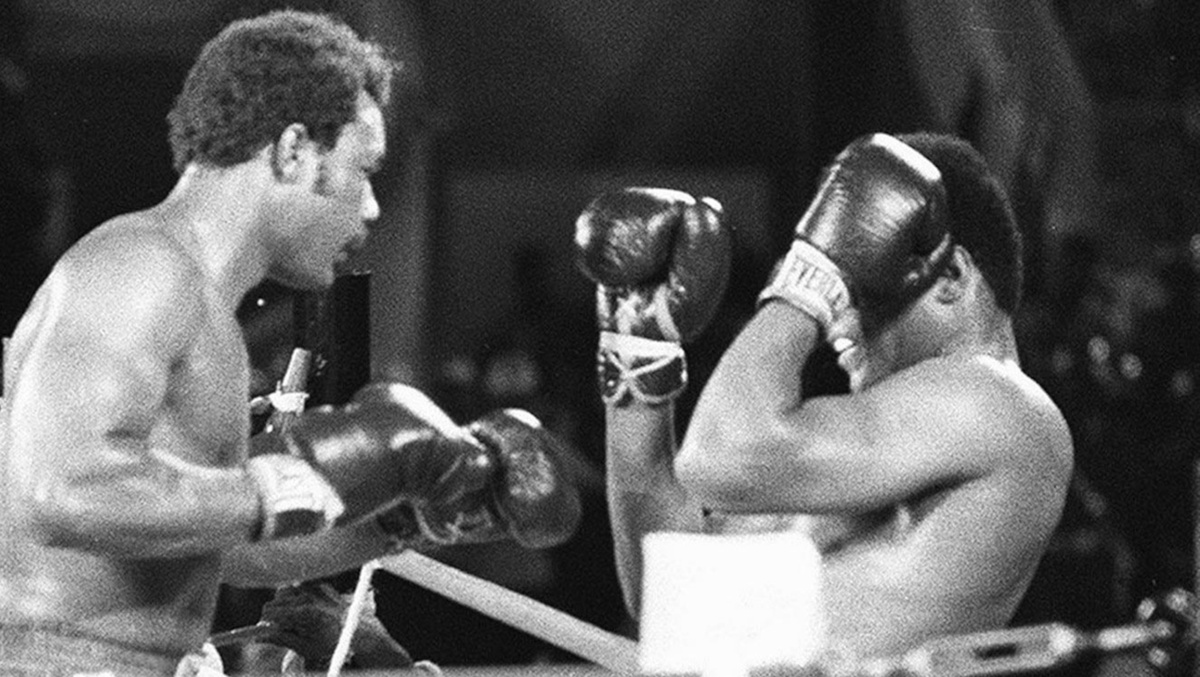
Iran has learned much from Ukraine on how cheap drones can hamstring high-priced technology and has had decades to plan for enduring a U.S.-Israeli onslaught. Iranian leaders know they cannot defeat a nuclear-armed Israel or a determined United States. Their only "total war" solution is to collapse the world economy as rapidly as possible to end any conflict. So, they have plans and capacity to maintain war production while effectively blockading the Strait of Hormuz. They will refrain from terrorist attacks in the U.S., because that is the one thing that could galvanize us as a country to tolerate high gas prices and put boots on Iranian ground. In short, Iran's plan is to lean against the ropes like Ali in Zaire, take the hits, and exhaust capitalism into tapping out before the West develops any will to actually invade.
And, fortunately for Iran, most of the world is happy to watch Trump twist in the wind, unaided, for quite a while. But at some point soon, some countries will facilitate some meetings somewhere in Switzerland to end this war by giving Trump his peace-with-honor participation trophy. The result will leave the Iranian regime functionally intact, as hard-line as ever, while pushing Trump further along his slow-motion defeat here in the U.S.
If this work is useful to you, consider supporting it.
♡ Support this work


Comments ()