
ICE is Built to Kill
The Trump administration claims 85% of ICE's surge hires are "experienced law enforcement officers." OPM payroll data tells a different story: two-thirds have no discernible law enforcement background.
Two-thirds of ICE recruits lack prior law enforcement experience
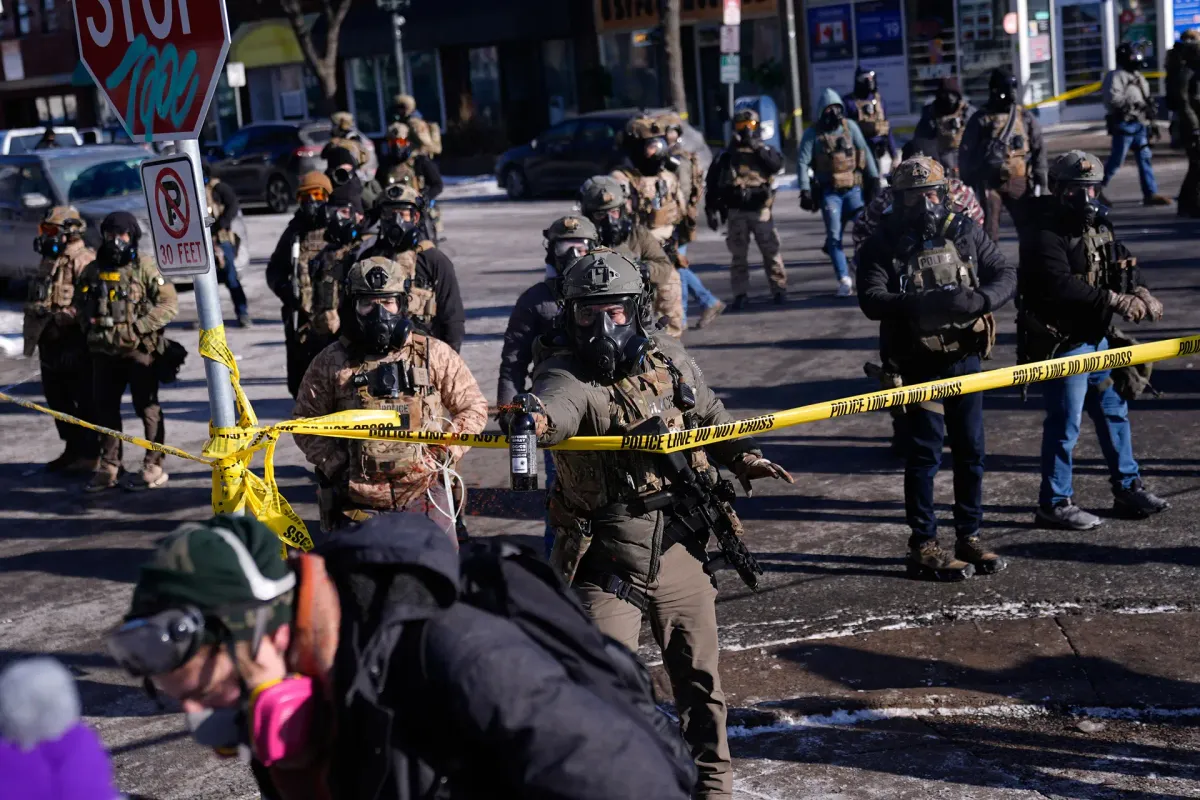
I understood ICE would be a serious problem the moment its toxically masculine acronym was announced in 2002. Two decades later, we have its roving SA troops in Minneapolis, killing two civilians during their federal 'enforcement' operations in the city.
ICE is now clearly a dangerous agency. And while ICE agents kill civilians, the administration's primary defense is that these are seasoned professionals rather than hastily assembled recruits, claiming 85% of its surge hires came in with prior law enforcement experience. But when agents with lethal force discretion are deployed into communities, claims about their experience are not merely spin - they are the administration's argument that the violence we experience is justified.
The data, however, tells the truth:
66.5% of ICE surge hires have no discernible prior law enforcement experience.
This is true - the Office of Personnel Management (OPM) data documenting every federal hire tells a very different story.
How to Catch an Agency
The Trump administration has made it harder to track what agencies are doing. OPM moved disciplinary firings into a generic 'other separation' category for leaving federal service - alongside employee deaths - hiding problems within the ICE agent talent pool. The Department of Homeland Security has declined to respond to congressional inquiries on recruiting and training standards, further obscuring problems with the agency.
But Trump cannot hide the paychecks.
With just three data points - Pay Grade at entry, Length of Service, and hire date - you can construct a model describing the agents surged into the field. I pulled 4,195 ICE Enforcement and Removal Operations hires from OPM's FedScope database and cross-tabulated grade against service history:
The Numbers
| Pay Grade at Entry | |||
|---|---|---|---|
| Length of Service |
Entry (GL-5/7) |
Mid (GL-9/10) |
Experienced (GL-11+) |
| ≈ 0 | 66.5% TRUE ROOKIES |
2.6% | 0.6% state/local |
| < 1yr | 1.8% | 0.0% | 0.0% |
| > 1yr | 13.5% uncredited |
0.7% | 14.3% fed/mil transfer |
Pay Grade here reflects what a new hire brings to the job. Come in with a bachelor's degree, no law enforcement experience - Grade 5 or 7. Master's degree or a year of specialized work - 9. Prior law enforcement experience - Grade 11 and above. Length of Service (LOS) tracks a person's time in federal or military service - if new hires have an LOS greater than zero on day one, they have federal experience. With zero LOS but a higher pay rate, you may have state or local police experience.
This table's top-left cell of entry-level Pay Grade and a zero LOS - 66.5% of surge hires - are those individuals with nothing in their records indicating any law enforcement background. No more than 29%, and this is generous, could have any outside law enforcement experience according to pay records - a 56 percentage point gap from the administration's claims. If people with actual law enforcement experience were truly being hired at scale, that would be seen in the Pay Grade and service history data, but it does not manifest.
The FBI Comparison
The FBI is arguably the most selective federal law enforcement agency. In February 2024, FBI Training Division Assistant Director Jacqueline Maguire published their workforce composition: 'More than 50% of new agents came from a military or law enforcement background.'
We cannot check this as we did with ICE because the FBI uses a flat entry grade (GL-10) for all New Agent Trainees, regardless of background. ICE is different and its data should reflect hires with past experience, but it does not. In making this comparison, the Trump administration is asserting there is more entry-level law enforcement experience joining ICE than joining the FBI.
What This Means
The Trump administration can lie, decline to respond to Congress, and send Tricia McLaughlin out to claim ICE hires a more experienced workforce than the FBI. But the federal government collects vast quantities of data on itself, most publicly available, that, when reconstructed, reveals truth.
Challenging bullshit with real data is the heart of this project. DHS made a claim. Understanding how government works - and the data it collects - says otherwise; it took just three data points for this analysis. Claims about federal workforce experience can be tested against hiring records. Claims about training outcomes can be tested against separation data. Claims about capacity can be tested against headcounts.
This research leads to my next question: if ICE is not hiring experienced officers, is it at least screening the inexperienced ones during training?
Part 2 is LIVE. Everyone Graduates ICE Killing Academy
New Ground in Progressive AI
The data I used is publicly available FedScope files from OPM's data portal, FedScope is meeting its DOGE-sanctioned end today, but data will still be available. Anyone can download it, apply the same filters, and verify. But let me pull back and explain this project's overarching goal - because it reaches far beyond ICE.
The federal government collects enormous amounts of data - but it is fragmented, obscurely coded, and rarely synthesized into useful forms. I did this analysis in a few days with the assistance of AI. I used Claude.ai to find, clean, map, and analyze data, collect the background information on such things as pay scales in OPM circulars and best practices in training. Then I bundled up this research and had other AI platforms check the work. And they did, finding errors it would have taken me hours to turn up in a matter of minutes.
I have a Master's in Public Administration and would be the first to admit this is not an article ready for a scholarly journal. It is an informed conjecture examining public data to challenge Trump's assertions. There could be a fatal flaw lurking here for an academic paper. This was a rolling project, running with conceptual scissors, beginning with one question, that eventually landed on the data used here and for the rest of this series.
But after this experience, I now see one perspective on AI as a form of rapid progressive prototyping or exponential fact-checking. This technology enables gathering and analyzing information at a scale I would not have imagined even last year. There are caveats and cautions, but with those in mind the technology opens up a vast new field of research for accountability, forcing transparency when a government wants to obfuscate, because it is often impossible to hide evidence - only to scatter it.
Data Sources
- FedScope Main Page: https://www.opm.gov/data/Index.aspx?tag=FedScope
- Accessions Data (Apr 2024 - Mar 2025): Download ZIP
- All data is publicly available from the Office of Personnel Management:
Filters Applied:
- Agency: HSBB (Immigration and Customs Enforcement)
- Occupation: 1801 (Enforcement and Removal Operations)
- Period: April 2024 - November 2025
Key External Sources:
- Newsweek (Oct 21, 2025) - McLaughlin '85% experienced' quote
- FBI Training Division (Feb 2, 2024) - '50% military or law enforcement' baseline
- CNN (Oct 23, 2025) - Training cut from 20 weeks to 8 weeks
- Partnership for Public Service (Jul 2025) - OPM data reclassification
- Padilla-Booker Letter (Nov 20, 2025) - Congressional inquiry on training
Note: FedScope is scheduled to sunset in January 2026. Replication can also be done via OPM's replacement site at data.opm.gov.


Comments ()